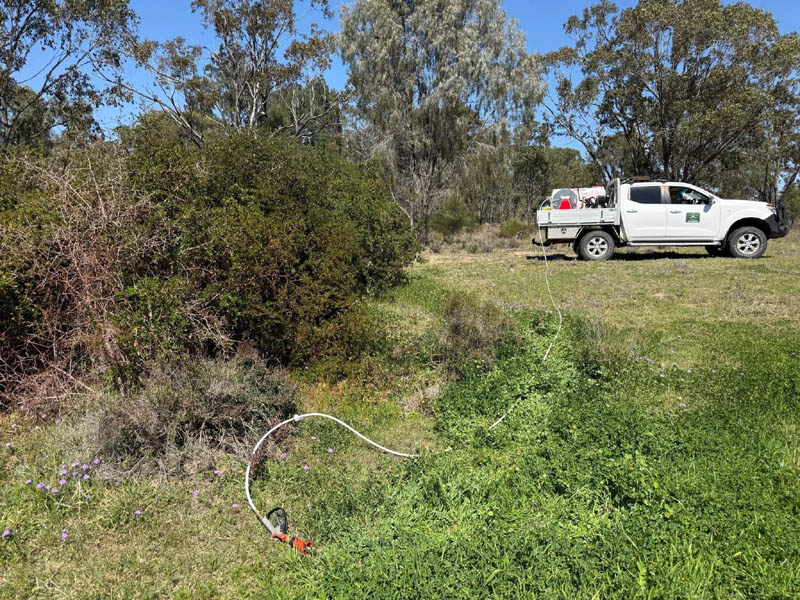
Weed Spraying
Why selective weed spraying beats a one-size wipeout
Knocking everything flat is the fastest way to get a worse problem next season.
People use the two terms as if they mean the same thing, and for quoting purposes that causes no end of confusion. They are different jobs, with different gear, and asking for the wrong one is how you end up disappointed with work that was done perfectly well.
Whipper snipping is soft-growth work: grass, weeds and light vegetation, usually around things you do not want to damage. Fence posts, tanks, the edges of a shed, the bits a mower cannot reach. The cutting head is a line, and line does not argue with woody stems.
Brush cutting is heavier. It is a blade rather than a line, and it is for scrub, saplings and established woody growth that has gone past the point where a line will touch it. Different machine setup, different technique, and a slower rate per hectare.
If you can push through it, it is whipper snipping. If you have to go round it, it is brush cutting.
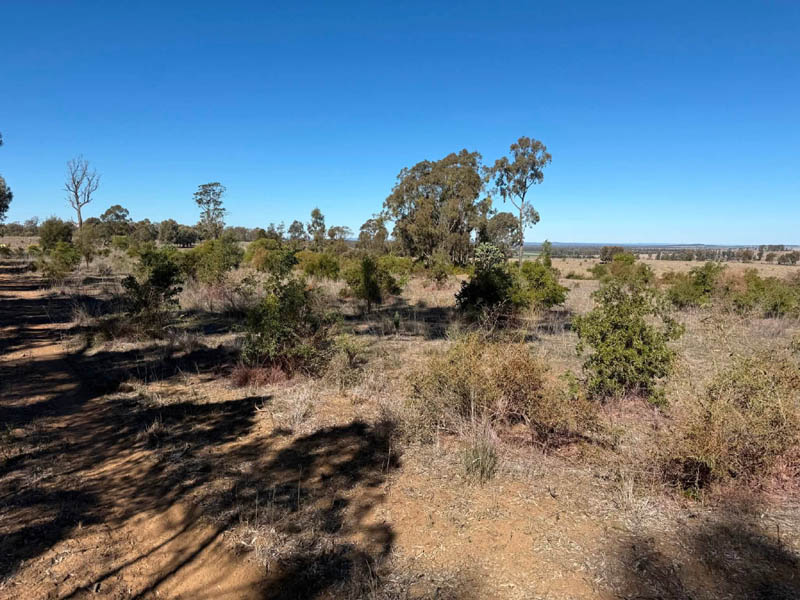
Heavier growth means slower going, more wear on gear and more time spent on cleanup. A quote given for tidying grass will not cover clearing four years of woody regrowth, and a contractor who quotes the former and finds the latter has to either come back to you or cut corners.
This is why we would rather look at a job than price it over the phone from a description. Two minutes on site removes the guesswork for both of us.
Worth being blunt about: cutting woody weeds does not kill them. It removes the top and the plant responds the way it has evolved to respond to being grazed or burnt — it shoots again, often from multiple points, and comes back denser than it was.
That is not an argument against cutting. There are good reasons to cut:
What it does mean is that if the goal is fewer plants next year rather than a tidier paddock this week, cutting is the first step and not the whole plan. Usually that means cutting for access, then treating the regrowth while it is young and actively growing.
You do not have to get the terminology right. Describe what you are looking at — how tall, how thick, whether you can walk through it, whether it is around structures — and let whoever is quoting decide which machine turns up. A photo does most of the work.
Knocking everything flat is the fastest way to get a worse problem next season.
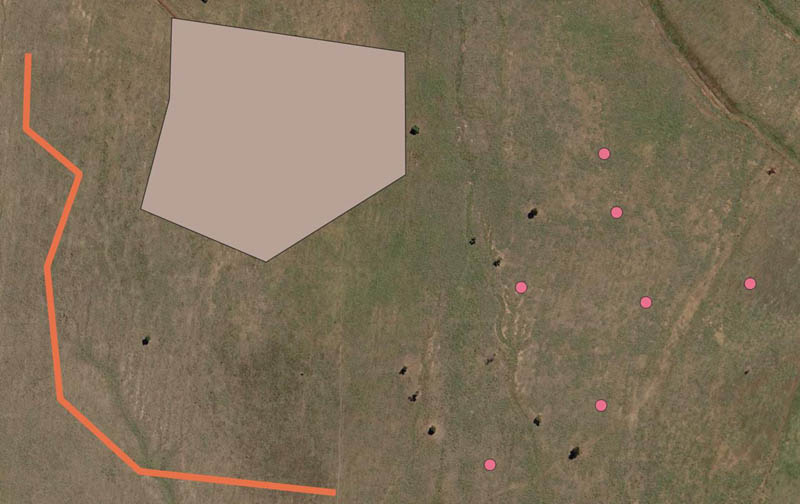
Paper spray sheets lose you money twice: in wasted chemical, and in ground you thought was done.